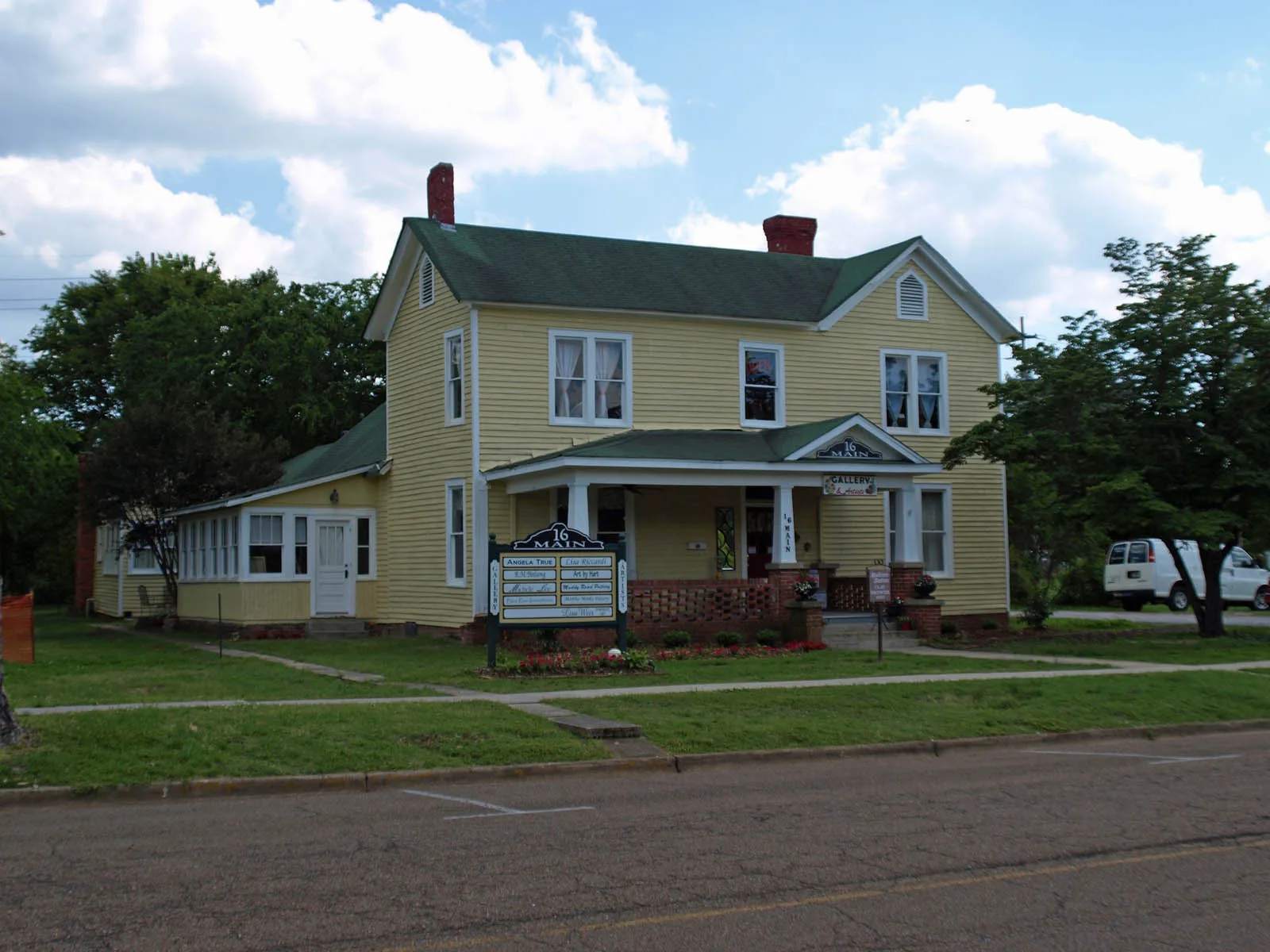
Madison began as Madison Station on the Memphis and Charleston Railroad in 1856 and was incorporated in 1869. Its historic district and landmarks.
Last checked Oct. 17, 2026. Facts on this page come from the City of Madison’s History of Madison, fire department history and cemeteries pages, the National Park Service’s National Register of Historic Places data and the Huntsville/Madison County Convention and Visitors Bureau. Every date is from those sources.
Madison is a railroad town. It grew up around a depot on the Memphis and Charleston Railroad, was first called Madison Station, and was incorporated in 1869. Its historic downtown, the Madison Station Historic District, sits along the tracks on Main and Front streets, a few blocks from City Hall.
Who to call
- Madison Station Historic Preservation Commission (work in the district): Planning Department, 256-772-5630
- City cemeteries (lot locations): Public Works, 256-772-8490
- Main Street Madison (downtown): 256-203-6340, 14 Short St.
How Madison began
The city’s History of Madison page tells the story in steps:
- 1818: John Cartwright, the first known settler, arrived in what was then the Mississippi Territory and received a federal land grant. His property was later sold to the Palmer family and became known as Palmer Place.
- 1856: the Memphis and Charleston Railroad Company laid tracks, and the town’s history began.
- 1858: Judge Clemons, one of the original landowners, laid out town lots fronting the railroad, each 66 by 198 feet. A depot went up on one of his lots, with a house for T.J. Clay, the first station agent.
- Early business: J.J. Akers ran a saw and grist mill, the first business; S.D. Doolittle opened a blacksmith shop; Walter and Thomas Hopkins and James Bibb were other early merchants. The business district grew along what became Main Street.
- May 17, 1864: the “Affair at Madison Station.” Federal soldiers had seized the railroad, a direct route for men and supplies to Georgia. By the Union soldiers’ records, the Confederates killed 18 and wounded 55, and the Union killed one, wounded three and took 66 prisoners.
- 1869: new businesses opened, and James Bibb and others petitioned the county probate judge to incorporate. The word “Station” was dropped, and the town became Madison. The fire department’s history gives 1869 as the year of incorporation.
From small town to fast-growing city
Volunteers with bucket brigades fought fires from 1869 into the 1940s. In 1948 Mayor Walton Hughes bought the city’s first fire truck, and the first fire station stood on Sullivan Street north of Palmer Road, the fire department says. The city puts its population at about 15,000 in 1990 and 30,000 in 2000; the Census Bureau estimated 67,968 in July 2025. See our population page.
On the National Register of Historic Places
The National Park Service’s National Register data list two places in Madison:
| Property | Address | Listed |
|---|---|---|
| Madison Station Historic District | Roughly bounded by Wall Triana Highway, Mill Road, Church Street, Maple Street, Martin Street and Bradley Street | March 2006 |
| James H. Bibb House | 11 Allen St. | April 1984 |
The links go to each property’s nomination file at the National Archives.
The historic district today
The city’s Madison Station Historic Preservation Commission reviews work on buildings in the district and meets at 5:30 p.m. on the second Wednesday of each month at City Hall. Its job, the city says, is to preserve the district’s buildings and promote Madison Station’s historic and visitor appeal.
Landmarks to see on a walk:
- The Roundhouse, on the Village Green by the tracks on Front Street: a replica of Madison’s first city hall, built on the spot where the Madison depot stood, according to the Huntsville/Madison County Convention and Visitors Bureau. The Madison Station Historical Preservation Society held a Christmas open house there in December 2025, the city’s events page shows.
- Main Street storefronts, including the Humphrey-Hughes Drug Co. building with its painted “Rexall Store” sign.
- Front Street houses, such as the two-story house with a wraparound porch at 17 Front St.
Cemeteries
The city owns two historic cemeteries, both sold out of lots, according to its cemeteries page:
- Madison Cemetery, on Mill Road just west of City Hall.
- Madison Memory Gardens, formerly Royal Cemetery, on Hughes Road just north of City Hall.
Groups that want to place wreaths or flags, hold strolls or make repairs must file a cemetery activity request with the City Attorney’s Office.
What this means for you
- Own a building in the district? Changes need Historic Preservation Commission review first.
- Visiting? Park downtown and walk Main and Front streets and the Village Green.
- Researching a grave? Call Public Works for lot locations.
More guides: Christmas parade and tree lighting and getting around Madison.
Frequently asked questions
When was Madison, Alabama, founded?
The town began in 1856, when the Memphis and Charleston Railroad laid tracks through what became Madison Station, according to the city. The first known settler, John Cartwright, arrived in 1818. Madison was incorporated in 1869.
Why is it called Madison Station?
The settlement grew around a depot on the Memphis and Charleston Railroad and was first called Madison Station. When residents petitioned to incorporate after the Civil War, the word Station was dropped, the city says.
What is on the National Register of Historic Places in Madison?
The Madison Station Historic District, listed in 2006, and the James H. Bibb House at 11 Allen St., listed in 1984, according to the National Park Service.
What was the Affair at Madison Station?
A Civil War battle fought on May 17, 1864, when federal soldiers seized the railroad at Madison Station, a direct route for men and supplies to Georgia, according to the city’s history page.
Have your say