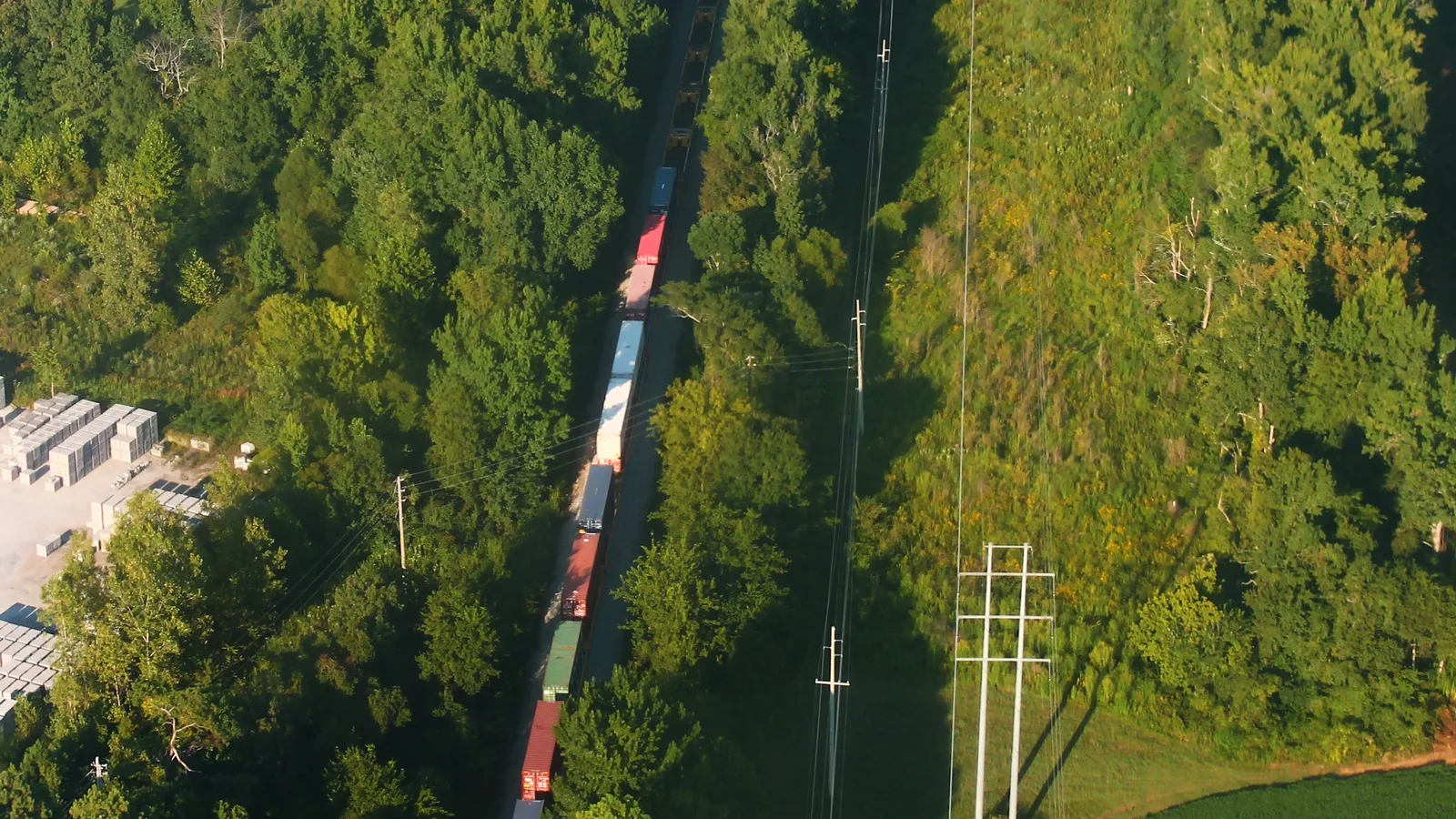
Madison's City Council votes Monday on a $197,500 study of a Slaughter Road bridge over the railroad. The plan would close the Shelton Road crossing for good.
Madison is taking a first formal look at carrying Slaughter Road over the Norfolk Southern railroad on a bridge. The same plan would permanently close the Shelton Road railroad crossing, about a mile west.
The City Council votes Monday on a $197,500 contract with the engineering firm Volkert Inc. for a limited feasibility study. It is Resolution No. 2026-453-R, Project 26-014, in the agenda for the Nov. 9 meeting. The meeting starts at 6 p.m. Monday in the Council Chambers at City Hall, 100 Hughes Road.
A study is not a decision to build. Nothing in the packet sets a construction date or a price for the bridge itself.
What the study would do
Volkert’s scope of work, dated Oct. 21, is in the council’s agenda packet. It calls the project the “Slaughter Road Grade Separation and Shelton Road Crossing Closure.”
The study has five stated purposes:
- count traffic to settle how many lanes the Slaughter Road bridge needs
- recommend a sidewalk, bike lanes or a shared-use path on the bridge
- draw a conceptual road and bridge layout from existing data
- produce a preliminary construction cost estimate
- write a grant application narrative for the city to use later
The firm would draw up to two options for the bridge, such as building on the existing line of Slaughter Road or on an offset alignment. It would also draw the Shelton Road closure, with pavement removed between Oakland Road and Wesley Lane.
The traffic work covers Slaughter Road, Shelton Road and Hughes Road. Hughes Road is studied as the detour route, because traffic that now uses the Shelton Road crossing would shift to Hughes Road and Slaughter Road.
A Huntsville road and a Madison road
The two crossings sit on either side of the city line. The scope says the Slaughter Road crossing is inside Huntsville’s city limits and the Shelton Road crossing is inside Madison’s. Norfolk Southern owns both.
That means Madison is paying for a study of a bridge on a stretch of road in Huntsville. The scope allows a kickoff meeting with the City of Huntsville and Madison County “at the City’s discretion,” and lists Huntsville among the partners who could sign letters of support for a grant.
The study area on Slaughter Road runs about 1,000 feet either side of the tracks. The scope says the final length depends on how long the approaches must be to clear the railroad. It also lists utilities in the way:
- Tennessee Valley Authority overhead transmission lines
- Huntsville Utilities power lines and a substation north of the railroad
- a natural gas line and underground telecommunications along the east side of Slaughter Road
- sewer lines near the creek crossing north of NW Pinehurst Drive
The two crossings, by the numbers
The Federal Railroad Administration keeps an inventory of every public crossing, with figures reported by the railroad. The crossing inventory records for the two crossings, USDOT Nos. 731818P and 731819W, were last revised Nov. 6:
| Slaughter Road | Shelton Road | |
|---|---|---|
| City | Huntsville | Madison |
| Tracks | One main track | One main track |
| Trains a day | 20 | 20 |
| Top timetable train speed | 60 mph | 60 mph |
| Road speed limit | 35 mph | 30 mph |
| Vehicles a day | 7,260 (2011 count) | 5,782 (2026 count) |
| School buses a day | 15 | 15 |
| Warning devices | Gates and flashing lights | Gates and flashing lights |
The 20 trains a day are eight daytime through trains, eight nighttime through trains and four switching trains, all freight. The Slaughter Road traffic figure in the federal record dates from 2011, so it is likely out of date. The new counts in the study would replace it.
The Shelton Road crossing has a 24-hour train horn ban on record, dated March 2008.
Who pays, and when
The $197,500 is a lump sum, paid from the Engineering Department budget. It splits into two parts:
- $155,000 for the study and report
- $42,500 for the grant application narrative
The scope says the study is meant to support a future application for federal money, such as the Federal Railroad Administration’s Railroad Crossing Elimination Program. The grant writing starts only when the city gives written notice, usually after a funding round opens.
Volkert expects to finish the report about five months after it is told to proceed. A draft is due in month four.
The study leaves out a field survey, geotechnical work, environmental documents, right-of-way mapping, final design and public meetings. Any of those would need a separate agreement.
Also on Monday’s agenda
Short-term rentals come back with two ordinances. Proposed Ordinance No. 2026-454 would set a $500 fine for running a short-term rental without a permit or license. Proposed Ordinance No. 2026-444, introduced Oct. 26, would create a five-member Short-Term Rental Appeals Board to hear permit denials, suspensions and revocations. Its members would come from the police, planning and fire departments, plus one council appointee and one mayoral appointee. None may own or run a short-term rental in the city. Our October report on the city’s permits and violation notices has the background.
Other items include:
- Dublin Park: a $21,500 contract with Mullins LLC for a topographic survey of the park north of Old Madison Pike, for “a future aquatic facility” (Resolution No. 2026-464-R)
- Donations: $150,000 from Madison County District 2 Commissioner Steve Haraway for police vehicles, and $40,000 from state Sen. Tom Butler split among the Police Department, the Fire Department and the Senior Center
- Police: a $14,930 Norfolk Southern Safety-First grant for the police drone program
- Transit: a $139,590 paratransit bus for MARS, bought through the Recreation Department from the half-cent sales tax capital replacement fund (Resolution No. 2026-450-R)
- Nonprofits: yearly city funding agreements, including $30,000 for The Enrichment Center, $25,000 each for Huntsville Botanical Garden and Crisis Services of North Alabama, and $10,000 for the Food Bank of North Alabama
The council also reorganizes at the start of the meeting and holds public hearings on two beer and wine licenses, for Padthai Street Kitchen at 8044 Highway 72 and County Line Exxon Gas & Food at 10311 County Line Road.
What it means for you
- If you drive Shelton Road across the tracks, this is the first public step toward closing that crossing. The study would model where that traffic goes, mainly Hughes Road and Slaughter Road.
- If you use Slaughter Road, a bridge would end waits for freight trains at the crossing. It is years from construction at best, and depends on a cost estimate and federal money that do not exist yet.
- To speak Monday, sign up with the City Clerk at cityclerk@madisonal.gov. Public comment is three minutes a speaker. Written comments go to citycouncil@madisonal.gov by noon on the day of the meeting, the agenda says.
- To watch, the meeting airs live on WOW! Channel 42 and online.
The city’s capital plans and road projects are tracked on our road construction and closures page and in our report on Madison’s five-year capital plan.
Have your say